
02
four things I keep separate
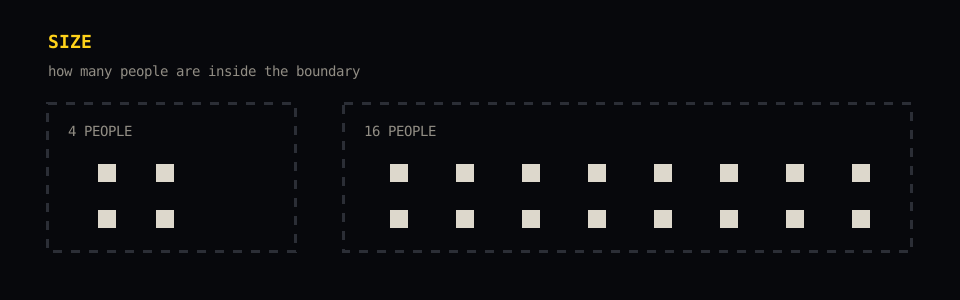
Size is how many people are inside the boundary. Rap is much larger than one local freestyle crew.
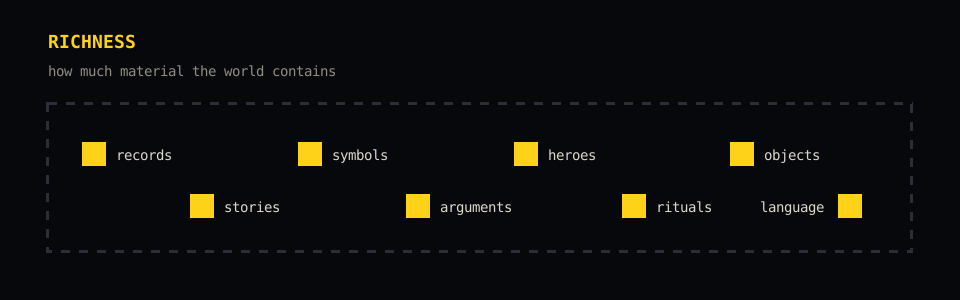
Richness is how much history, language, symbolism, and material a world contains. Rap, Spanish freestyle, and personal growth can all be extremely rich.
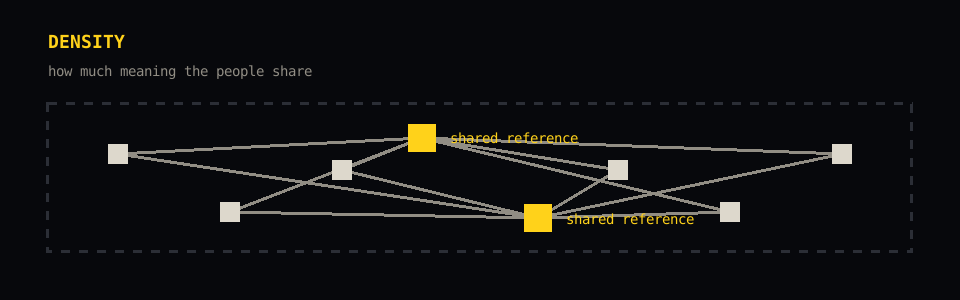
Density is how much of that meaning is shared by the people inside the boundary. When many people recognize the same events, objects, arguments, and status markers, there is more overlap. When the references split into pockets that rarely meet, the world can be rich and fragmented at the same time.
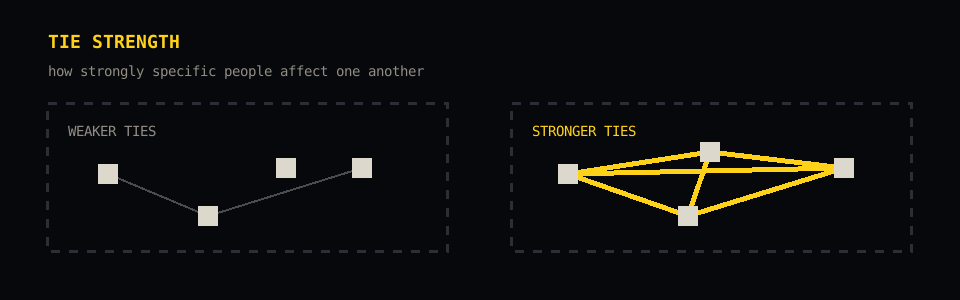
Tie strength is how strongly specific people know and affect one another. A local crew may have fewer people and less total history, but one person's choice can matter immediately to everybody else.
This also keeps density separate from a niche. A niche tells me which group or problem I chose to focus on. Density tells me how much meaning is already shared inside that group.
03
the boundary changes the answer
If I mention Aczino versus Chuty inside a group of people who follow the current Spanish freestyle circuit, many of them may know the battle, the history around both names, what was at stake, and why people still argue about it.
The same reference inside a room of general rap listeners could be recognized by only a few people. The references stayed the same. The boundary changed.
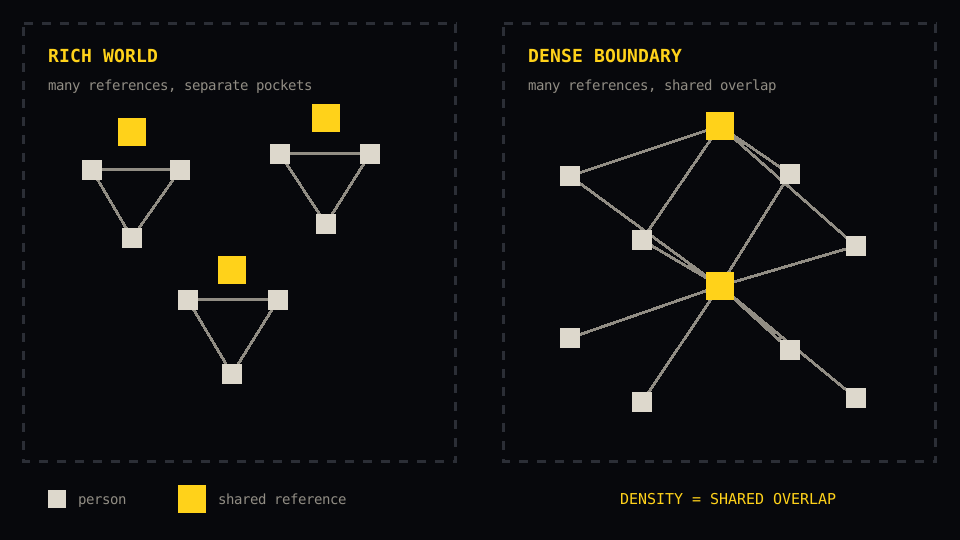
The left side of the diagram shows a rich world where references are spread across separate pockets. The right side shows a boundary where more people share the same references. The diagram compares the distribution of meaning, not which world has more history.
04
what density changes
Shared references make conversation move faster. People can build on what came before instead of explaining the same names, events, and arguments every time.
That speed also makes pretending easier to detect.
If I use a name slightly wrong, miss the history behind an object, or repeat an argument the world settled years ago, an insider notices. The same context that gives me more to work with gives me more ways to get it wrong.
That is where recognition friction begins.